
Ledderhose disease: symptoms, diagnosis and treatment
Ledderhose disease, also called plantar fibromatosis, is a condition where the tissue (fascia) in the sole of your foot thickens. It typically starts as a small lump in the arch of your foot (plantar fibroma). Over time, these lumps may grow and become tender and painful, especially when you stand or walk. About 1 in 4 people with Ledderhose disease have the condition in both feet.
If Ledderhose disease is causing pain or affecting your daily life, non-surgical treatments like radiotherapy can be effective at reducing pain and shrinking the lumps. Our consultant radiotherapy specialist Dr Richard Shaffer can assess your feet and give you an honest opinion on whether this treatment is suitable for you.
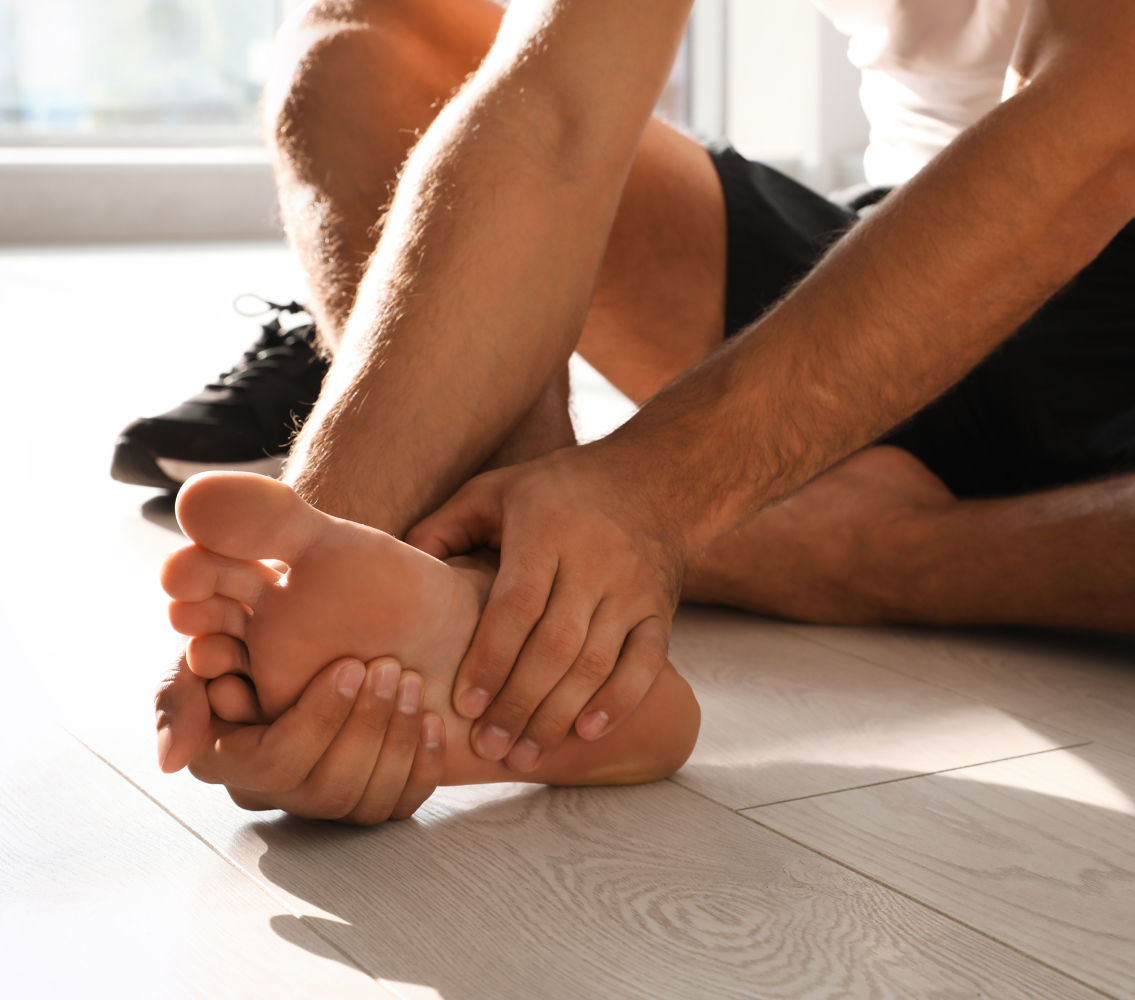
Symptoms and causes of Ledderhose disease
The first sign of Ledderhose disease is usually a firm, often painless lump in the arch of your foot (between the heel and the ball of the foot). These lumps can grow and become painful or tender when you stand, walk, or go barefoot, and wearing certain shoes may become uncomfortable.
Lump or callus?
A callus is an area of thickened skin, whereas a Ledderhose nodule develops in the tissue underneath the skin.
Is it plantar fasciitis?
Plantar fasciitis usually involves pain in your heel, and is often worse when you take your first steps of the day. Ledderhose nodules typically occur in your arch. If you are concerned about heel pain that hasn’t responded to simple, first-line treatments, it’s worth having a specialist examine your foot as we can also help with radiotherapy for plantar fasciitis.
Who gets it?
Ledderhose disease usually affects middle-aged and older people, although it can develop in younger adults too. It is more common in people who have Dupuytren’s disease in their hands, and some people have both conditions.
What causes it?
Doctors do not know the exact cause of Ledderhose disease; however, research shows it can run in families. It is not caused by injury, repetitive strain, or the type of footwear you wear.
Diagnosis: how Ledderhose disease is confirmed
Your doctor can usually diagnose Ledderhose disease by examining the location and feel of lumps on your foot. They may occasionally recommend an ultrasound or MRI scan to clarify or rule out other causes of a lump.
It can be helpful to note when you first noticed the lumps, whether they have grown, and what makes the pain better or worse. Taking photos of your feet every couple of months gives you something to compare against.
Diagnosis and treatments for Ledderhose diseaseLedderhose disease treatment options in the UK
There is no cure for Ledderhose disease. However, there are treatments that aim to significantly relieve your pain, slow its progression, and help you walk more comfortably. The most appropriate option depends on how much the lumps trouble you.
| Option | Who it suits | What it typically involves | Typical recovery | Availability in the UK |
|---|---|---|---|---|
| Monitoring and self-care | Lumps that cause little or no pain | Keeping an eye on size and symptoms, photographing your feet, and wearing cushioned footwear or offloading orthotics | None | NHS and private |
| Footwear and insoles | Lumps that hurt when you stand or walk | Soft, cushioned insoles or orthotics to reduce direct pressure on the lumps | None | NHS and private |
| Low-dose radiotherapy | Painful or growing lumps | A short course of outpatient appointments using low-dose radiation aimed at the lumps. No anaesthetic, needles, or incisions | Most people carry on with normal life | Some NHS departments, and private |
| Surgery | Severe pain that other treatments have not helped | An operation to remove the lumps. The disease often comes back, and the sole of your foot may heal slowly | Several weeks, sometimes longer | NHS and private |
Treatments with limited effect
Some treatments are offered for Ledderhose disease when footwear changes haven't eased the pain, but their benefit is either short-lived or poorly supported by evidence. Steroid injections are given into the lumps to reduce pain. Any relief is often temporary, and the injection doesn't change the underlying nodules. Shockwave therapy is sometimes used for foot pain. For Ledderhose specifically, the evidence is limited.
What does not help
There is no good evidence that creams, supplements or massage can slow down how Ledderhose disease develops.
Not sure which fits you?
Radiotherapy for Ledderhose disease
Low-dose radiotherapy uses carefully targeted radiation to calm the tissue changes caused by Ledderhose disease. It involves significantly lower doses of radiation than those used in cancer treatments, and aims to reduce your pain and slow down the disease.
What treatment involves
A short course of outpatient appointments, each lasting a few minutes, where low-dose radiation is precisely aimed at the lumps in your foot. There is no anaesthetic, no incision and no downtime, and you can continue with your normal daily routine. The skin over the treated area can become red or dry for a while afterwards, and your doctor will give you advice on aftercare.
What the evidence says
The LedRad trial in the Netherlands was the first to compare radiotherapy for Ledderhose disease with a treatment that had no medical effect. At 12 months, more patients who had radiotherapy reported pain relief than those who received the dummy treatment. People who had radiotherapy were also able to walk faster barefoot and reported a better quality of life. While radiotherapy results vary from person to person, the trial showed clear, measurable relief for most patients.
Why timing matters
Pain relief from successful radiotherapy tends to build gradually rather than happening immediately. In clinical trials, the clearest differences were seen at 12 and 18 months. Because the effect is slow to develop, Dr Shaffer advises people not to wait until the pain is severe to consider radiotherapy treatment. However, if the lump is small and not painful, then Dr Shaffer may advise you to watch and wait rather than have immediate treatment.
Your consultation is with Dr Richard Shaffer
Dr Richard Shaffer is a Consultant Clinical Oncologist who has treated around 3,500 patients with benign conditions, including Dupuytren’s and Ledderhose disease. He also trains and mentors other consultants in radiotherapy for benign conditions.
He established Dupuytren’s UK to offer non-surgical options for people with Ledderhose disease and early Dupuytren’s disease, who are often told to wait until their symptoms become severe.
During your consultation, Dr Shaffer will examine your feet, assess how your lumps affect your mobility, and clearly explain your treatment options. He will give you personalised, honest advice on whether low-dose radiotherapy, simple monitoring, or other treatments may be more appropriate for you.
What happens when you get in touch
Getting started is simple, and you do not need to have it all worked out first.
Get in touch. Book a consultation online, send an enquiry or call us on 07584 532397. You do not need a GP referral. Once you book, we will send you a confirmation email with a short health questionnaire and our patient information leaflet.
Attend your consultation. You can book an appointment at one of our clinics in London, Guildford, Manchester or Nottingham. If you are unable to attend one of these clinics — for example, if you live outside the UK — Dr Shaffer can also see you by video consultation to assess whether treatment may be suitable for you.
Create a plan. If radiotherapy is suitable for you, your specialist will explain what the treatment involves and what you can expect. If another approach, such as monitoring or custom footwear, would be more appropriate, he will explain why and advise you on the best next steps.
Treatment and follow-up. Treatment takes place at whichever of our 16 centres is most convenient for you. Dr Shaffer reviews how your feet are doing afterwards. Because pain relief builds slowly, we usually do this review many months later.
Patients in their own words
These stories reflect individual experiences, and results vary from person to person. They are included to give you an idea of what other patients have experienced during treatment.

NHS, private insurance and self-pay
Simple measures such as changing your footwear, using insoles and taking pain relief can help with symptoms. Radiotherapy is one of the most effective treatments for reducing pain and shrinking Ledderhose nodules. If radiotherapy is not effective, other options such as injections or surgery may be considered.
With private medical insurance: Many insurers fund radiotherapy for Ledderhose disease, and others will consider it case by case. Our team can tell you what your insurer is likely to ask for, so you can check your policy and discuss authorisation before you book.
If you are paying yourself: We’ll send you a clear price list so you know the cost of the consultation and the treatment in advance.
Payment and insurance informationWhere you will be seen and treated
You can choose where you have your consultation and treatment.
Where possible, we recommend seeing Dr Shaffer in person for your first consultation. You can book an appointment at one of our clinics in London, Guildford, Manchester or Nottingham.
If you are unable to attend one of these clinics — for example, if you live outside the UK — Dr Shaffer can also see you by video consultation to assess whether treatment may be suitable for you.
If you decide to go ahead, you can have your treatment at whichever of our 16 centres is most convenient for you. Find your nearest centre below.
See all centres